Cockatiel Weaning: A Guide for Parrot Parents
Specific Methods and Precautions for Weaning Cockatiels
Many parrot parents, when hand-feeding their cockatiels, notice that around two months of age, their young birds suddenly lose interest in baby bird formula. They might take a few sips and then start bouncing and flying around. Some might even refuse to open their mouths when formula is offered. This isn’t a sign of illness; it’s a normal manifestation of the “weaning period.” At this point, you can start teaching them to eat solid food and begin the weaning process. Below, I’ll share my specific methods and precautions for weaning cockatiels.
Identifying the Weaning Period in Cockatiels:
The simplest indicator: when the cockatiel reaches 60 days old, or when it starts refusing formula.
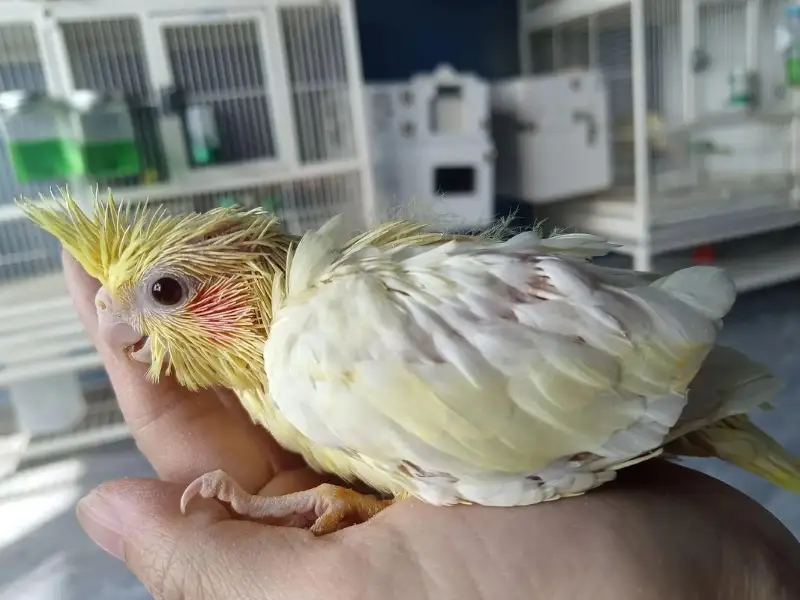
Observe the cockatiel’s crop and feathers. The crop will appear smaller than it did at 20 days old. This is because its body is beginning to adapt to solid food rather than just baby bird formula, as it did right after hatching.
Feathers will gradually cover the crop, and the bird will be able to fly short distances. Beyond just growing feathers, it will also start enjoying chewing on toys and food. At this point, you can generally confirm that the bird has entered the weaning period.
Specific Methods to Help Wean Your Parrot:
First, place fresh food in the birdcage. I recommend nutri-berries (pellets), cooked tender corn, and cooked carrots. It’s best to introduce the food you plan to use as their main diet later. This makes the transition smoother and avoids the need for a food change. Pellets, in particular, should be introduced now. If you miss this crucial weaning window, getting your cockatiel to accept pellets later can be quite challenging.
Gradually reduce the frequency of formula feedings to keep the cockatiel slightly hungry. This encourages it to naturally peck and explore the food in the cage with its beak. For example, if you were previously feeding them 5 times a day, you can reduce it to 4 times. Observe if the parrot explores other foods. After a couple of days, reduce feedings again to just 3 times a day, decreasing gradually.
You can also add millet to the formula. The millet should first be softened with hot water or steamed, then mixed into the formula. For instance, initially, the ratio of formula to steamed millet could be 5:1 (5 parts formula, 1 part steamed millet). As feeding days progress, slowly increase the proportion of steamed millet until it completely replaces the formula.
Another option is to mix formula with pellets. This allows the chick to get used to the taste of pellets earlier, making them more readily accepted. I will share more content about pellets in a future update.
Key Points for Weaning Cockatiels:
It’s important to observe whether the parrot is independently pecking at and exploring food inside the cage. You can watch discreetly or even install a camera. When chicks see their parrot parents, they might immediately abandon their efforts to eat on their own and start begging for food. Therefore, we need to use a stealthy observation strategy. If the parrot is exploring food on its own, regardless of whether it eats anything, it’s a good sign. It indicates the bird is actively learning how to eat, and weaning at this time is appropriate.
If the parrot is not yet actively exploring food, it might mean the weaning process is starting too early. You can postpone weaning for a few more days.
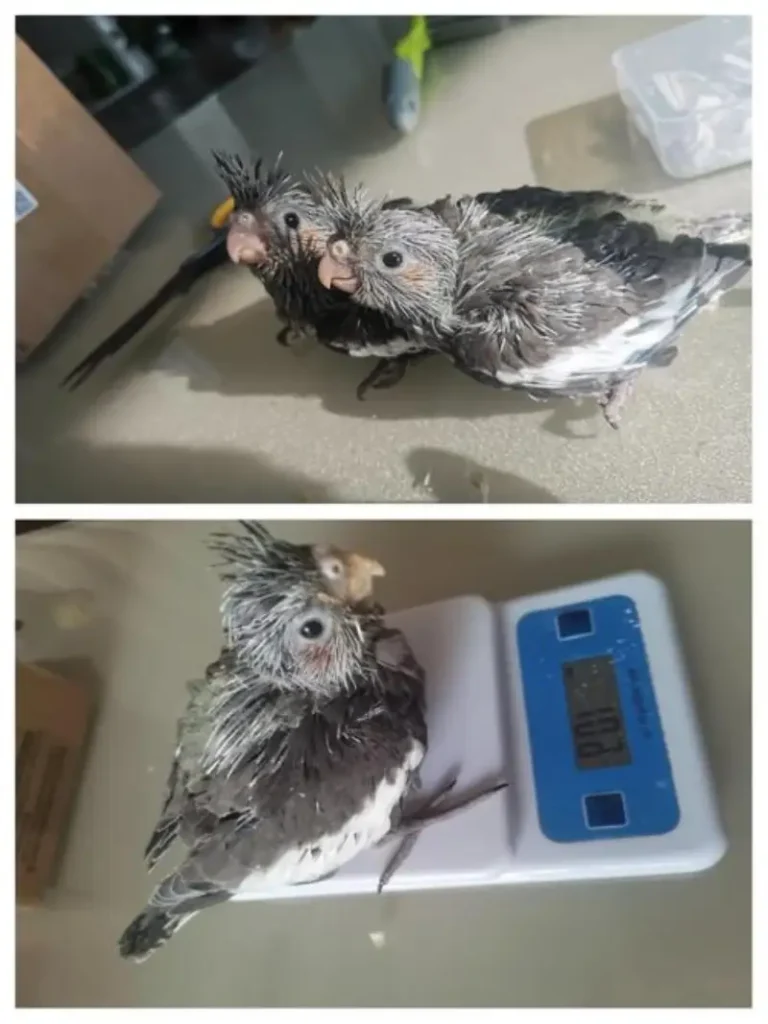
Weight Loss During Weaning:
During the cockatiel’s weaning period, a weight loss of 10-15% is normal. If weight loss exceeds 15%, it’s advisable to offer an additional formula feeding to ensure the parrot’s health. Once the weaning period ends, the parrot’s weight will gradually stabilize. Therefore, developing a habit of daily weighing is crucial, especially during this period.
These are my methods and precautions for weaning cockatiels. If you have any additions or questions, please feel free to leave a comment. I hope every parrot parent can successfully guide their little one through this challenging period.
Great content! Keep up the good work!